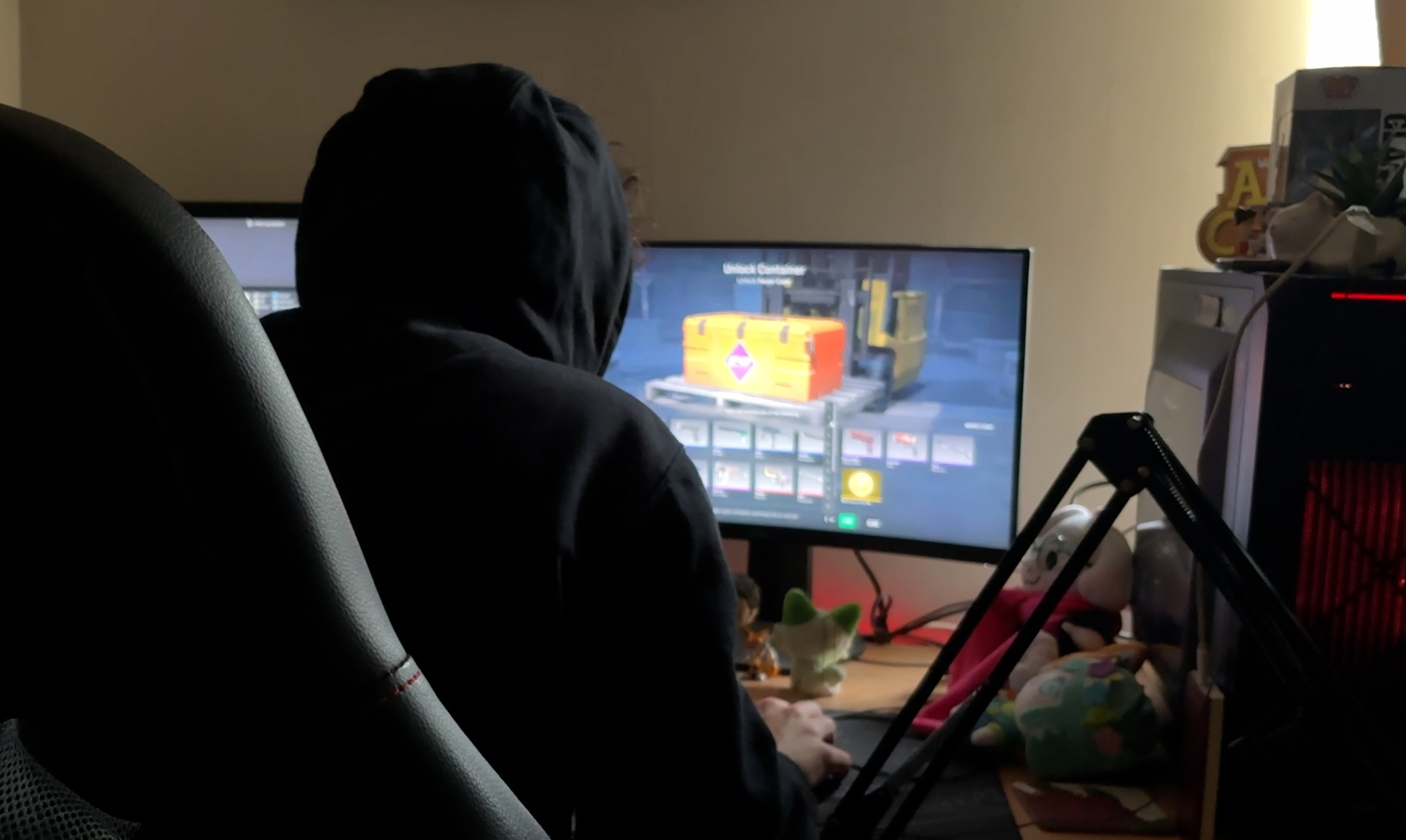
The casino for children that never closes
It’s a trend that makes gaming companies 15 billion dollars a year, but all at the cost of our nation’s future.
Loot Boxes are a mechanic used by video games like Roblox, FIFA and Counter-Strike 2 for players to randomly unlock virtual cosmetics such as clothes or weapon skins for under 5 dollars.
In a game like Counter-Strike 2, gamers can buy a virtual ‘key’ to open a ‘case’ which can contain a random weapon skin that can be worth 0.09 cents or at most, near 1.5 million dollars.
Games with this function aren’t just on consoles or computers however, but also smart devices like mobile phones, such as the phone that 20-year-old Liam Huynh Ya plays games on.
“Only recently I've deleted a few ‘gacha’ games from my phone. I’ve only got Magic the Gathering, and I’m still stuck. I’m still playing the game just to open packs and it sucks,” Huynh Ya says.
‘Gacha’ games operate in a similar function to loot-boxes, where players can purchase chances to obtain different characters or cards to have better abilities in the game.
‘Genshin Impact’ is an incredibly popular example of ‘gacha’ games, with the title having an estimated 16 million monthly players.
“The whole thing is just grinding for that one currency so you can try and get that one character you want and that’s what keeps you in.” Huynh Ya says.
According to a study by Central Queensland University 92.7 per cent of teenagers aged 12-17 have reported playing a video game with loot boxes in the last year, with 68.8% of them opening a loot box in the last year.
This in-game mechanic has drawn parallels to gambling, with the main criticism being that it is a chance-based system, which is similar to a slot machine at a casino.
“You’re incentivized by your brain to get dopamine from it.” Huynh Ya says.
“My friend was so used to playing ‘gacha’ games that when we went to the casino, he had already forgotten that it was really a hundred dollars in his hand.”
The Australian government has responded to complaints about the loot box system and have forced all video games sold in Australia with loot boxes to have a mature rating seen on the box and in video game stores.
But as the purchase of physical video games declines, with Sony’s Q4 2024 earnings report revealing that 76% of PlayStation video game sales are digital, the question turns to whether this is enough to stop digital sales too?
Huynh Ya sees the value in this change but holds similar concerns about the implementation.
“I believe that this would detract kids from gambling, however content online may still promote children to get into the game and bypass this rating at their own risk.” Huynh Ya says.
While the issue of loot boxes may continue to rise, with more and more gamers purchasing them every year, Huynh Ya is optimistic that if developers focus on making a fun, enjoyable game, everything will work out in the end.
“These games are focused on making money and nothing more, they should instead put more focus on what the game is itself and create a positive gameplay loop for their players.”
Post a comment